
SUNSTONE
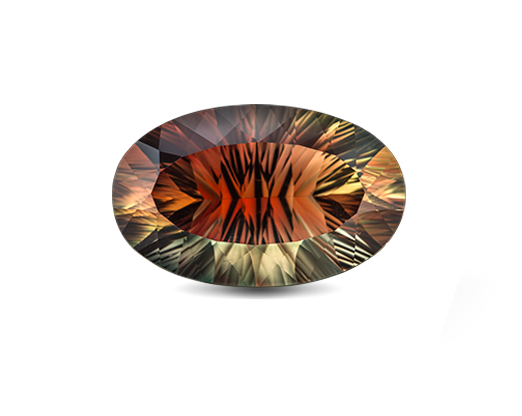
Sunstone’s phenomenal varieties show a distinct and lively glitter called aventurescence.
Overview
ABOUT SUNSTONE
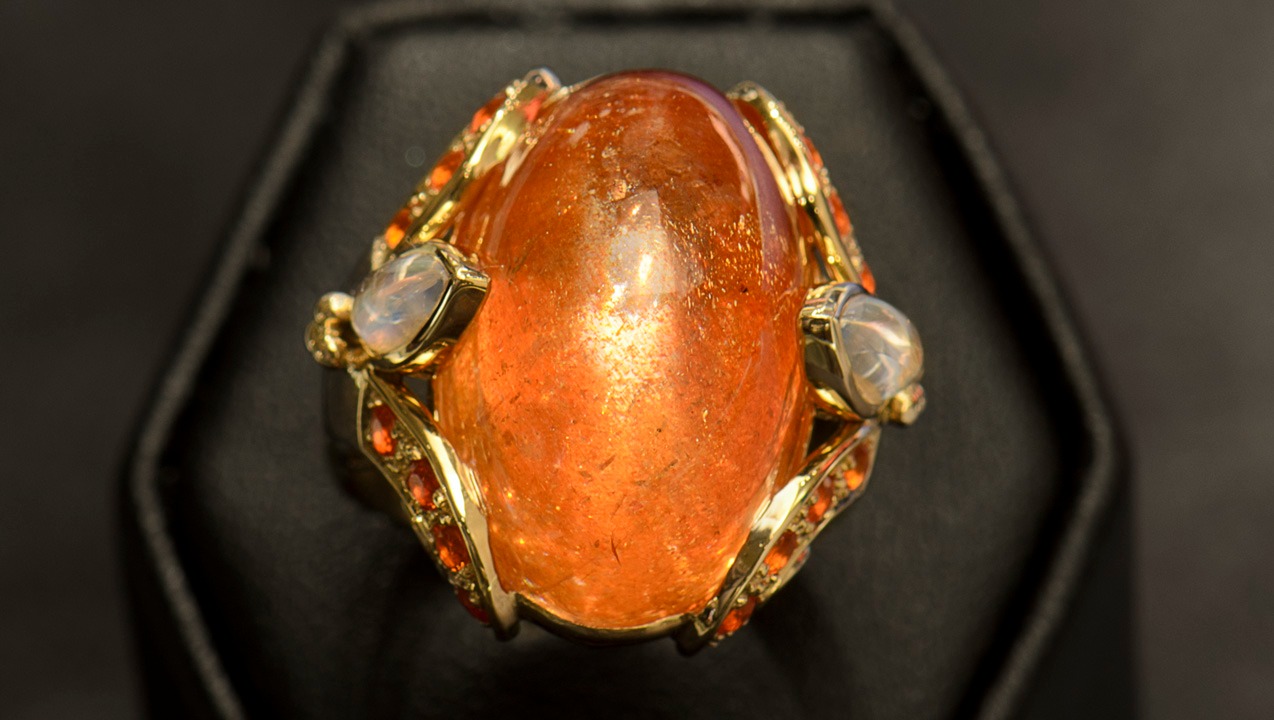
Sunstone is a member of the feldspar group. Both the orthoclase and the plagioclase feldspar species boast a sunstone variety. Other feldspar group gems include moonstone, non-phenomenal orthoclase, phenomenal and non-phenomenal labradorite, and amazonite. Sunstone from Oregon is gaining attention as a natural and untreated product of the United States.
Sunstone Description
FELDSPAR
Sunstone is a member of the feldspar group of minerals.
ADVENTURESCENE
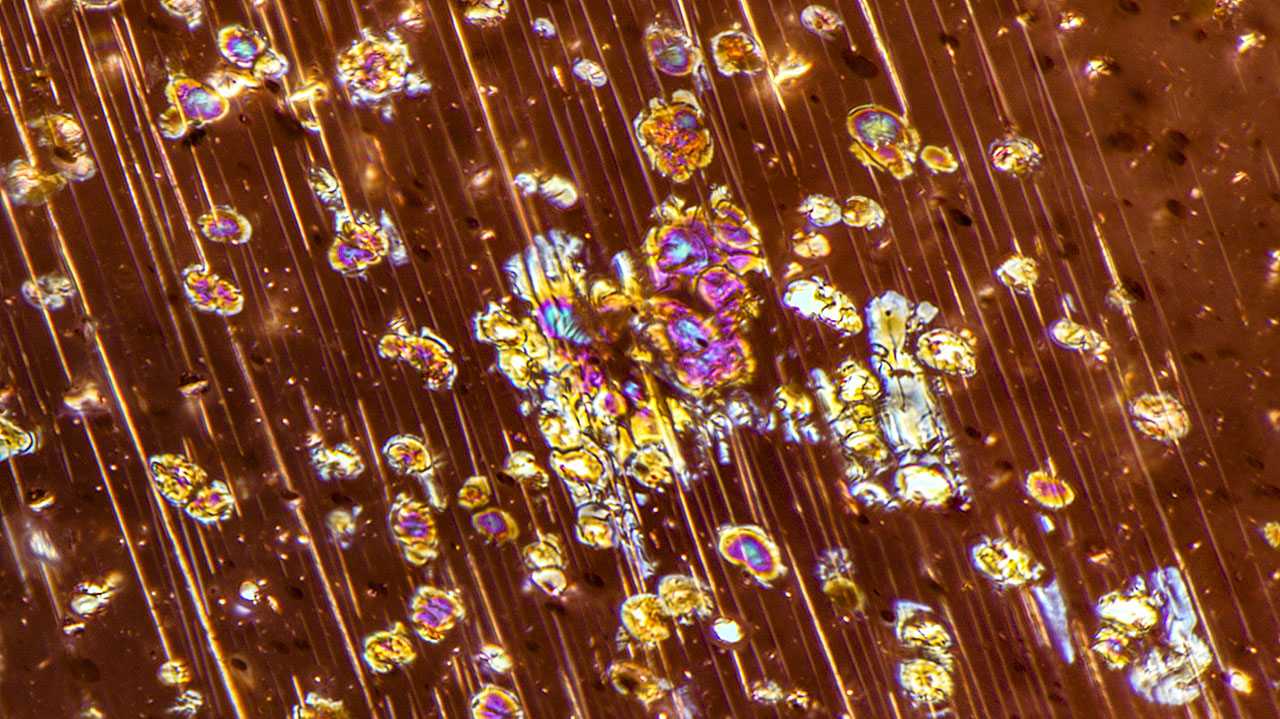
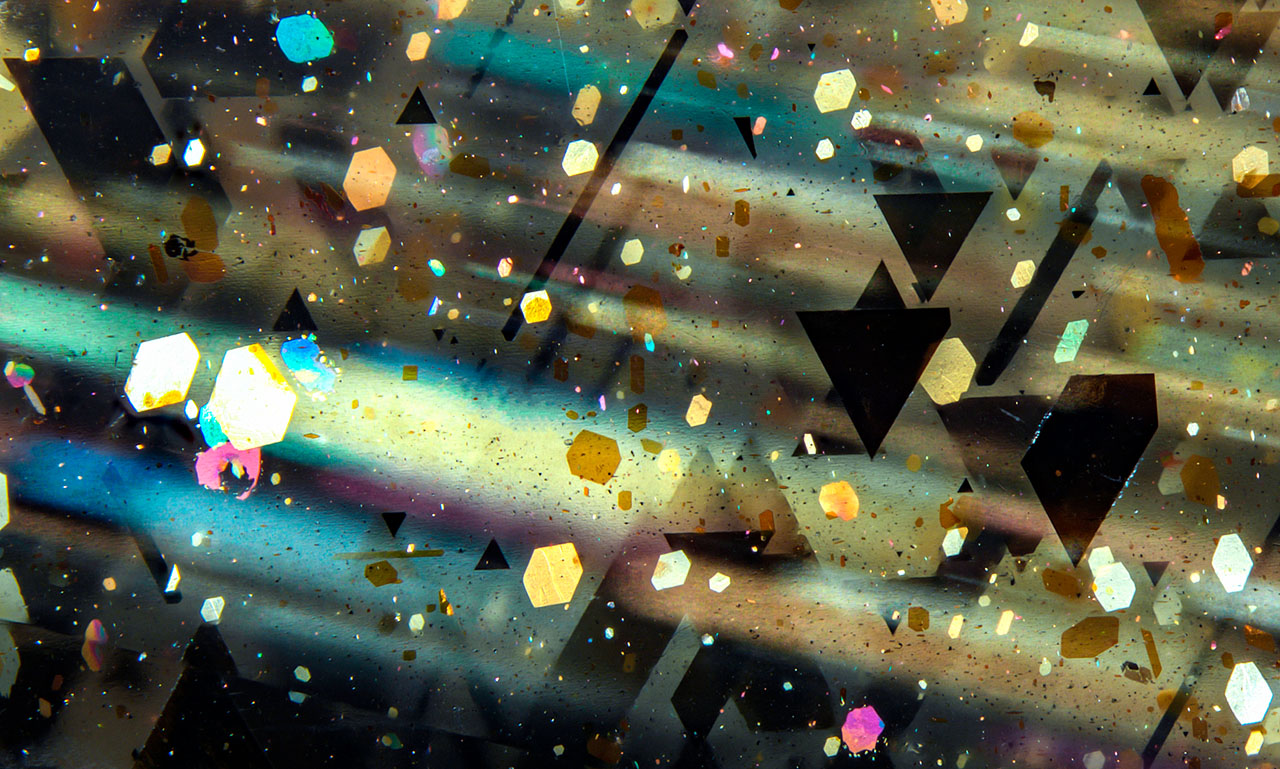
Sunstone can have a sparkly, metallic-looking luster caused by flat, reflective inclusions.
OREGON
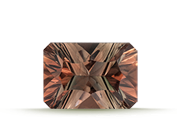
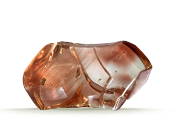
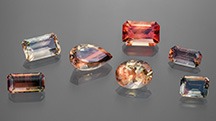
Oregon sunstone is a transparent feldspar with glittery copper inclusions.
FACTS
Mineral: Feldspar
Chemical composition:
Orthoclase - KAlSi₃O₈
Oligoclase and labradorite - solid solution between NaAlSi₃O₈ and CaAl₂Si₂O₈
Color: Yellow, green, red, red-brown, colorless
Refractive Index:
Orthoclase sunstone - 1.518 to 1.526
Oligoclase sunstone - 1.537 to 1.547
Labradorite sunstone - 1.559 to 1.568
Birefringence:
Orthoclase - 0.005 to 0.008
Oligoclase and labradorite - 0.007 to 0.010
Specific Gravity:
Orthoclase - 2.58
Oligoclase - 2.65
Labradorite - 2.70
Mohs Hardness: 6.0 – 7.2
TREATMENTS
There are a number of processes used to alter the color, apparent clarity, or improve the durability of gems.
SYNTHETICS
Some gemstones have synthetic counterparts that have essentially the same chemical, physical, and optical properties, but are grown by man in a laboratory.
IMITATIONS
Any gem can be imitated—sometimes by manmade materials or by natural materials chosen by man to impersonate a particular gem.
Why We Love This Gemstone

1
GLITTERY
Reflective inclusions in sunstone’s phenomenal varieties cause a distinct and lively glitter called aventurescence.
2
NATURAL
Oregon sunstone’s colors don’t result from treatment. The gem’s all natural and it’s mined in the United States.
3
“SPINEL RED”
Red-colored Oregon sunstone is often marketed to consumers as “spinel red.” Its vivid hue rivals spinel and even ruby.
QUALITY FACTORS
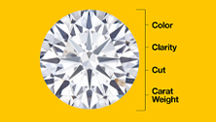
The following factors combine to determine a sunstone’s value.
COLOR
CLARITY
CUT
CARAT WEIGHT
SUNSTONE QUALITY FACTORS: THE COMPREHENSIVE GUIDE
RESEARCH
Explore sources, gemological research, and the role of gems in history.
Special Colors and Optical Effects of Oregon Sunstone: Absorption, Scattering, Pleochroism, and Color Zoning
Shiyun Jin, Aaron C. Palke, Nathan D. Renfro, and Ziyin Sun , Nov 3, 2023
Fluorescence Characteristics of Two Copper-Diffused Plagioclase Feldspars: Labradorite and Andesine
Qingchao Zhou, Chengsi Wang, and Andy H. Shen , Jan 25, 2023
RECOMMENDED READING
.png "reading")
Exotic gems (Volume 2)
Renée Newman
Feldspar Mineralogy
Ribbe, P. H